Jaffa Gate
Our tour begins at Jaffa Gate, the historic connection point between the Old City and modern Jerusalem. Standing beside the impressive Ottoman walls, we explore how the city was fortified and how this gate became one of the most strategic entrances to Jerusalem. From here we enter the Old City and ascend toward the nearby Tower of David Museum, where the long story of Jerusalem begins to unfold.
Church of the Holy Sepulcher
From the Tower of David we continue to the Church of the Holy Sepulcher, one of the most important pilgrimage sites in Christianity. Inside the church we visit different chapels and encounter the many Christian communities who share this sacred space, including the Ethiopians, Copts, Franciscans, Armenians, and Greek Orthodox. Along the way we also encounter stations of the Via Dolorosa and learn about the delicate balance known as the Status Quo that governs life inside the church.
Western Wall
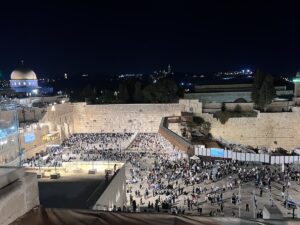
Walking through Chain Street, we reach the Western Wall, the most significant Jewish prayer site in the world. The wall is a remaining part of the retaining walls of the Second Temple complex and has become a powerful symbol of Jewish prayer, memory, and longing for Jerusalem. Here we observe the diversity within the Jewish world and conclude the visit at the mixed prayer plaza, a public area opened in 2017.
Temple Mount
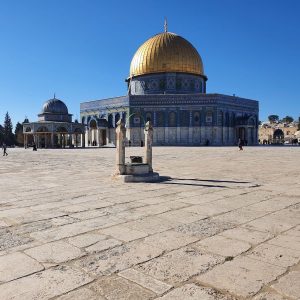
From the Western Wall we ascend the Mughrabi Bridge toward the Temple Mount, one of the most sensitive and significant religious sites in the world. Entry is possible only at specific hours, and appropriate attire is required. During the visit we see the major landmarks of the compound, including the Dome of the Rock and the Al Aqsa Mosque, while exploring the deep religious importance of the site in both Judaism and Islam, as well as its contemporary relevance.
Mount Zion
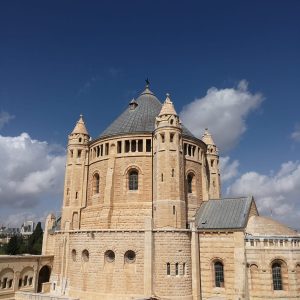
Our tour concludes on Mount Zion, a place sacred to Judaism, Christianity, and Islam. Here we visit the two levels of the historic structure that houses the Tomb of King David and the Room of the Last Supper. This final stop offers a powerful opportunity to reflect on the shared history of the three monotheistic religions and the connections — as well as the differences — between them.